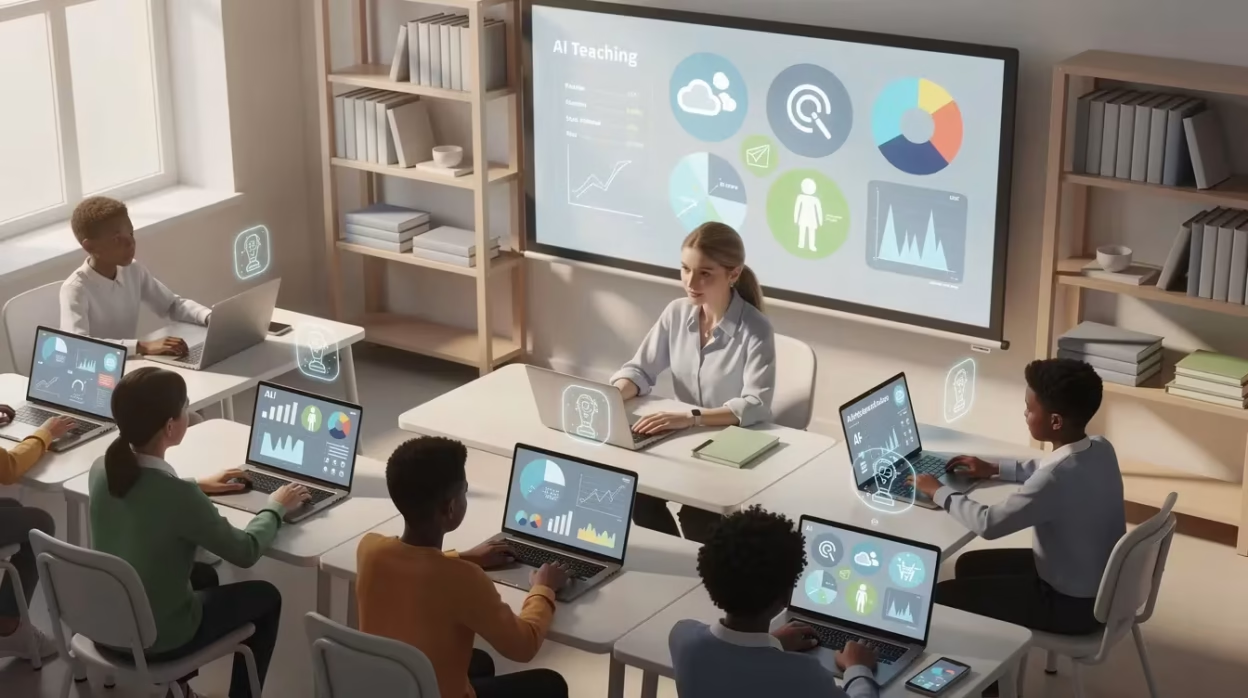
Artificial intelligence in the classroom has experienced explosive growth, with educators’ use of generative AI jumping from 51% to 67% between the 2022-23 and 2023-24 school years. Despite this rapid adoption, many teachers are implementing these powerful tools quietly and without fanfare.
In fact, 86% of education organizations now use generative AI—the highest adoption rate of any industry. However, this widespread implementation often happens behind closed doors, even though the benefits of AI in education are becoming increasingly clear. Students in AI-enhanced active learning programs achieve 54% higher test scores than those in traditional environments, while teachers using AI for administrative tasks save 44% of their time on research, lesson planning, and material creation.
The data paints a compelling picture of why using AI in education is no longer optional but essential. Yet there remains a disconnect between the remarkable results and the hesitancy to openly embrace artificial intelligence and the future of teaching and learning. Throughout this guide, we’ll explore why teachers are implementing AI quietly, examine how they’re actually using these tools in 2026, and discuss what needs to change for education systems to fully benefit from this technological revolution.
Table of Contents
Why Teachers Are Turning to AI Quietly
Behind closed classroom doors, educators across America are quietly integrating artificial intelligence in the classroom. Their clandestine approach isn’t about hiding something harmful—it’s about navigating uncertain terrain in an evolving educational landscape.
Lack of formal guidance from districts
The primary reason for this quiet adoption stems from a significant policy vacuum. According to recent data, only 45% of principals report having school or district policies or guidance on the use of AI in schools. Furthermore, merely 34% of teachers report having school or district policies on AI related to academic integrity. This lack of clear direction leaves educators to make individual judgment calls about appropriate AI use.
“I want to make this choice myself and not let the current zeitgeist make it for me,” expressed one teacher grappling with the decision to incorporate AI into classroom activities. This sentiment reflects a broader challenge: teachers must balance innovation against undefined expectations.
The training gap compounds this problem significantly. Over 80% of students reported that teachers did not explicitly teach them how to use AI for schoolwork. Additionally, as of spring 2025, only 35% of district leaders reported providing students with any training on AI. Without proper guidance, both teachers and students remain uncertain about appropriate use cases.
Fear of backlash or misunderstanding
Many educators experiment with artificial intelligence and the future of teaching and learning in private because they fear judgment from colleagues, administrators, and parents. As one English language teacher revealed, “I feel like there’s a stigma when a teacher uses ChatGPT. It’s like, ‘Oh, the teacher is not that competent because she uses ChatGPT'”.
This perception issue isn’t limited to language teachers. Another educator shared a troubling experience: “I typed [into ChatGPT] ‘What is the difference between I have to and I’ve got to?’ and a student complained to my boss, saying ‘[She] is being lazy. She doesn’t want to explain. She uses ChatGPT'”. After this incident, the teacher stopped using AI tools openly in class.
Even teachers comfortable with using AI in education often choose discretion over transparency. As one instructor noted: “I’ll continue to use it. I might not be as open in my use of it as I am with you right now”. This reluctance stems from colleagues who see AI as “an existential threat to the industry and to them morally and professionally”.
Desire to experiment before policies catch up
Despite these challenges, many teachers recognize the benefits of AI in education and choose to explore its potential quietly before formal policies solidify. According to one survey, many teachers who aren’t currently using AI reported they were “exploring future use” rather than having “no immediate plans”. This indicates a growing curiosity and willingness to experiment.
Several factors motivate this experimentation:
The desire to address overwhelming workloads
Recognition that students are already using these tools regardless of school policies
The understanding that AI literacy will be essential for students’ futures
“I understand completely the feeling of being overwhelmed by the rapid pace of developments,” noted one educator, “but the writing is on the wall for traditional classroom practices”.
Some teachers view the absence of policy as an opportunity rather than a hindrance. One teacher described joining an AI committee to develop a “shared philosophy that would preface our new AI policy,” noting “we aren’t afraid. We are embracing it”. Nevertheless, this proactive approach remains the exception rather than the rule.
Consequently, the education sector finds itself at a crossroads—educators recognize AI’s potential value yet lack the institutional support to implement it openly. This situation leads to inconsistent adoption patterns where innovation happens in isolation rather than through coordinated, system-wide approaches.
The Real Problems AI Is Helping Solve
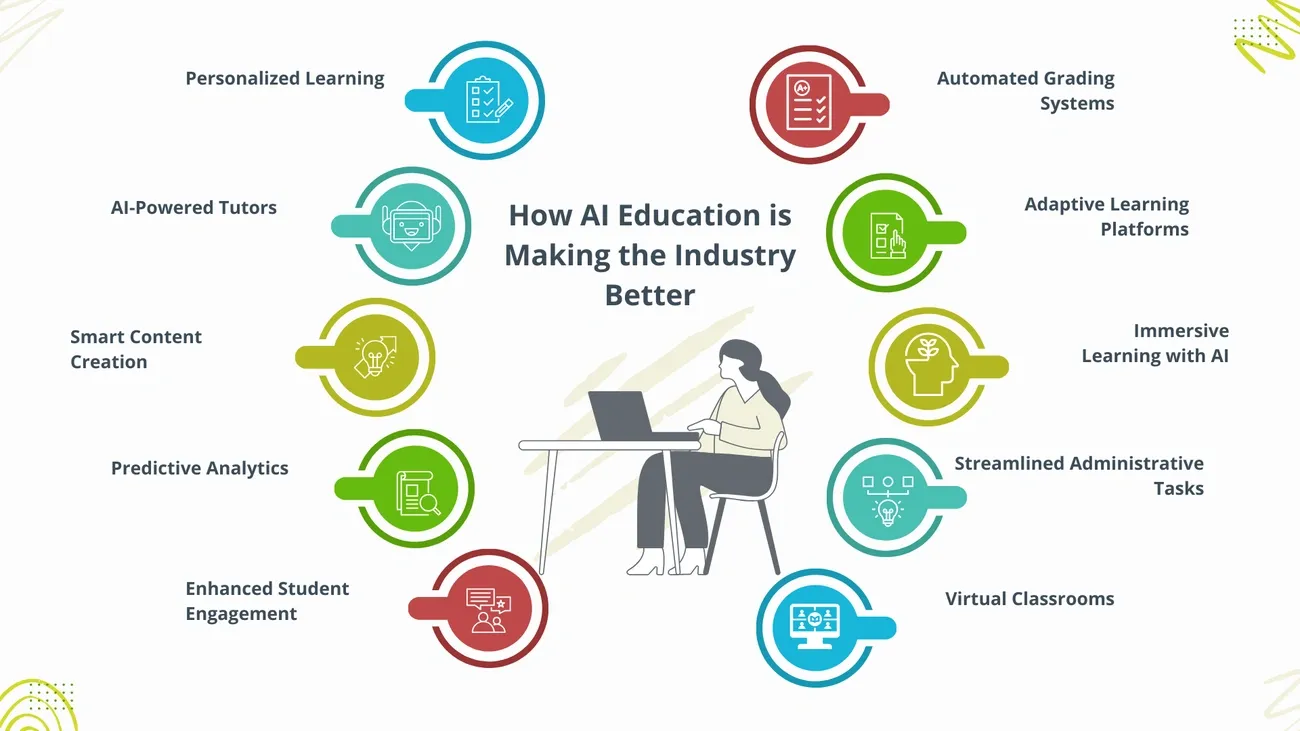
Image Source: Signity Solutions
Teachers today face mounting pressure to deliver exceptional education with increasingly limited resources. As professionals, they’re turning to artificial intelligence in the classroom to address three critical challenges that traditional solutions haven’t adequately resolved.
Overwhelming administrative workload
The modern teacher spends up to 29 hours weekly on non-teaching tasks – emails, grading, finding resources, and administrative work. This administrative burden significantly contributes to high stress levels and places educators at substantial risk for burnout.
AI provides immediate relief by automating routine tasks that consume valuable time:
Documentation and record-keeping: AI can sort data, predict patterns, and help with weekly newsletters, while 60% of principals report using AI for administrative tasks like drafting or amending school policies.
Translation and communication: About half of principals use AI to draft communications to stakeholders, with many teachers reporting that AI helps them communicate with administrators and parents in minutes instead of the 15+ minutes it would typically take.
Administrative processing: Tasks like finalizing staff time sheets become streamlined as AI builds tables summarizing employee leave days for pay periods.
“One of the most significant benefits of integrating AI into my workflow has been the remarkable amount of time saved, allowing me to focus on the more meaningful aspects of administration, such as connecting with the people in my building,” reports one administrator.
Lack of personalized support for students
Personalized learning has long been an educational ideal but remained practically impossible in traditional classrooms with current teacher-to-student ratios. Initially, teachers struggled to provide individualized attention to every student, especially those with diverse learning needs.
Currently, AI offers a revolutionary solution through:
Content adaptation: Teachers commonly use AI to generate text at different reading levels, enabling students to access materials that match their comprehension abilities.
Targeted feedback: Tools like Class Companion provide high-quality feedback on student writing, indicating whether students are on the right track and asking guiding questions to improve responses.
Learning gap identification: Platforms track student performance across various metrics, helping teachers identify learning gaps and adjust instructional strategies accordingly.
Dartmouth research demonstrates that AI has “the potential to provide tailored, interactive instruction outside of the traditional academic setting”. Moreover, this represents “a step toward precision education, meaning the tailoring of instruction to each learner’s specific needs and context”.
Time constraints in lesson planning
Teachers typically spend five hours weekly on lesson planning alone – a full hour of each workday. Yet 58% report they would benefit from even more planning and support to reduce their workload.
Fortunately, AI tools specifically designed for lesson planning provide substantial relief:
AI platforms like MagicSchool generate complete lesson plans with objectives, learning activities, extension activities, and closure. Teachers can utilize the suggested “80/20 approach” where AI does the bulk of initial work (80%), which educators then review for bias and accuracy before finalizing the remaining 20%.
For educators teaching abstract topics, AI tools like Monica AI improve research performance with effective analysis while ensuring cited information comes from reliable sources. As one teacher explains: “It saves us time in writing instruction and creating content, even though we need to use professional judgment to check for accuracy and bias”.
The real-world impact is substantial – teachers report AI tools can give back 10+ hours weekly, allowing them to focus on what truly matters: meaningful student interactions and creative teaching.
Although educators should remain vigilant about AI-generated content for accuracy and standard adherence, these tools are fundamentally shifting how teachers work by specifically addressing their most pressing challenges.
How Teachers Are Actually Using AI in 2026
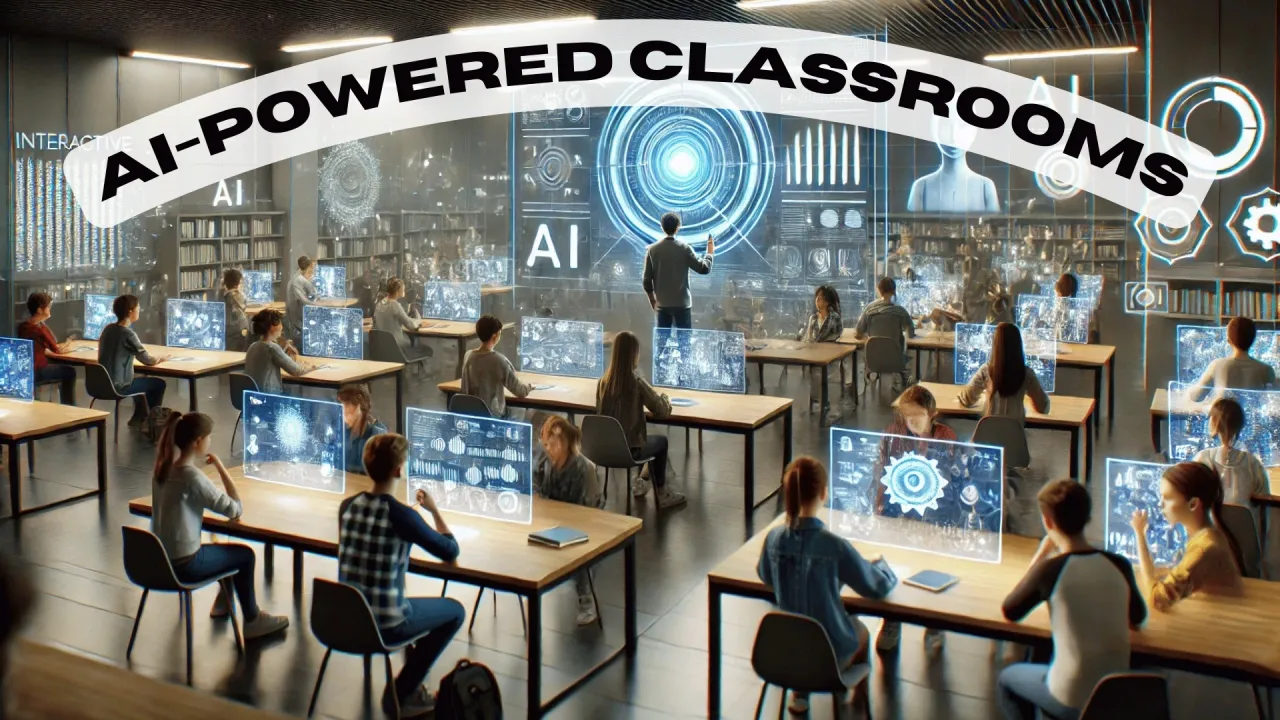
Image Source: LinkedIn
In classrooms across the country, innovative educators are putting artificial intelligence to work in four primary ways that transform both teaching and learning. Unlike the experimental approaches of previous years, 2026 has seen AI tools mature into reliable classroom assistants that address specific educational needs with remarkable precision.
Creating differentiated lesson plans
By 2026, lesson planning has evolved dramatically. AI-driven platforms generate complete frameworks in minutes, helping teachers reclaim precious preparation time. These systems don’t just produce generic outlines—they create tailored educational experiences by analyzing student performance data, learning pace, and preferences.
The most effective AI lesson planners work through conversation, where teachers provide specifics about grade level, subject, and standards. Within seconds, educators receive building blocks that traditionally required hours to assemble—clear objectives, warm-up activities, guided practice, materials lists, and assessment options.
Notably, the best platforms now remember teaching context between sessions. Instead of re-entering information each time, they learn how educators teach and what their students need, making each new plan more relevant from the start. This contextual understanding allows teachers to focus on adding their unique voice and classroom-specific examples rather than starting from scratch.
Generating quizzes and assessments
Quiz creation has been revolutionized through AI tools that instantly transform content into comprehensive assessments. Modern systems generate:
Multiple question types (single-choice, multiple-choice, dropdowns)
Difficulty levels tailored to student abilities
Automatic scoring logic and feedback pathways
For instance, Canva’s quiz generator allows teachers to select specific text, generate questions covering that material, and customize the output with personal touches. These tools reduce grading workloads by approximately 70%, freeing educators to focus on curriculum development and personalized student support.
In essence, AI-driven assessment tools have created more responsive classrooms where teachers can concentrate on providing individualized guidance rather than spending hours creating and grading tests.
Providing instant feedback to students
Presently, one of AI’s most valuable contributions is providing students with immediate feedback, eliminating long waits associated with traditional grading. Research shows this instant response prevents misconceptions from taking root and creates rapid learning cycles for continuous improvement.
AI feedback systems analyze student work in real-time, providing immediate insights to both learners and teachers. For written assignments, advanced systems provide nuanced feedback on structure, argumentation, and style in ways traditional rubric grading can’t match.
Furthermore, a Stanford-led study published in Educational Evaluation and Policy Analysis found that AI-powered feedback tools improved instructors’ teaching practices by helping them better acknowledge and build on students’ contributions. The findings also revealed improved rates of assignment completion and overall course satisfaction among students.
Summarizing complex topics for clarity
At this point, AI summarization tools have become essential for making complex material accessible to diverse learners. Teachers regularly use these systems to transform dense readings into engaging audio overviews, colorful infographics, or interactive slide decks.
Tools like Grammarly’s summarizer help educators identify the main points of lengthy reports and papers, creating clear, concise summaries that capture key concepts while maintaining accuracy. This capability proves particularly valuable when teaching abstract or technical subjects.
In addition, image-generating AI tools like Picsart and Visme can transform complex concepts into visually accessible content, helping visual learners grasp difficult ideas more readily. These tools don’t replace teacher expertise but amplify it—allowing educators to present information in multiple formats without spending hours creating each version manually.
Why AI Feels Like a Risk, Not a Resource
Despite the growing adoption of AI tools in education, many teachers still view artificial intelligence in the classroom with significant reservation and caution. This hesitation stems from legitimate concerns that have yet to be fully addressed by educational institutions or technology providers.
Concerns about cheating and misuse
The perception of AI as primarily a tool for cheating remains widespread among educators. Many still see AI primarily as a threat rather than as a transformative educational resource. This concern dominates educational discourse about AI—where AI is mentioned in teacher preparation programs, it is usually in the context of student plagiarism.
Yet interestingly, research from Stanford suggests that AI may not be increasing cheating rates after all. Their ongoing studies show cheating rates remain similar to pre-AI levels, with approximately 75% of students reporting behaviors that qualify as cheating in the last month—figures similar to what was reported prior to AI. What has changed is not the prevalence but the nature of cheating, with “a decline in copying off a peer” as students turn toward AI tools instead.
Nevertheless, fear persists. A majority of teachers (71%) report that student use of AI has created an additional burden on them to determine whether work is original. Similarly, 70% of teachers worry that AI weakens critical thinking and research skills, suggesting a fundamental concern about how these tools might undermine educational objectives.
Unclear ethical boundaries
Beyond cheating concerns, educators grapple with profound ethical questions surrounding artificial intelligence and the future of teaching and learning. Privacy violations rank among the top issues, with many experts noting that “AI systems ask for users’ consent to access their personal data” but “many individuals give their consent without knowing or considering the extent of the information they are sharing”.
Additionally, the algorithms powering educational AI tools frequently reflect existing societal biases. The most significant risks include:
Perpetuating systemic bias and discrimination
Creating unfairness for students from disadvantaged groups
Amplifying various forms of prejudice embedded in training data
Surveillance represents yet another ethical dilemma, as AI systems increasingly monitor student activities. These systems can “not only necessitate monitoring of activities but also determine the future preferences and actions of their users”. Educators rightfully question: “How can students feel secure and safe, if they know that AI systems are used for surveilling and policing their thoughts and actions?”
Lack of training and support
Perhaps most tellingly, nearly 58% of K-12 teachers have yet to receive any training on artificial intelligence, even two years after ChatGPT’s introduction. This training gap represents one of the primary reasons teachers avoid integrating AI into their classrooms.
For those who do receive training, the content often proves insufficient. Less than a third of teachers say their training included guidance on:
How to use AI tools effectively (29%)
What AI is and how it works (25%)
How to monitor and check AI systems (17%)
Students face similar knowledge gaps, with few receiving guidance on school AI policies (22%), the risks of using AI (17%), or basic AI literacy (12%). Half of students report that using AI makes them feel less connected to their teachers, highlighting how poorly implemented AI can damage educational relationships.
Faculty resistance compounds these challenges, with many viewing AI as a threat. According to research, only 10% of faculty members feel confident using AI, and some actively avoid it due to fears it might “steal their personal data, their intellectual property, or even their jobs”.
Until these concerns about cheating, ethics, and training are properly addressed, artificial intelligence in the classroom will continue feeling more like a risk to manage than a resource to embrace.
The Emotional Side: Burnout, Hope, and Quiet Innovation
Beneath the practical adoption of artificial intelligence in the classroom lies a powerful emotional narrative. For many educators, AI tools represent more than just efficiency—they offer a lifeline in a profession facing unprecedented burnout rates.
Teachers using AI to reclaim time
The emotional toll of teaching has reached critical levels, with 76.9% of Canadian educators reporting feeling emotionally exhausted. For Heather Gauck, a special education teacher with three decades of experience, AI has become a crucial tool for reclaiming her life. Previously sleep-deprived—working past midnight and rising at dawn—she now uses AI for lesson planning, differentiating materials, and IEP writing, gaining “an entire planning day” back.
This time recovery isn’t insignificant. Teachers who use AI weekly save an average of 5.9 hours per week—equivalent to six weeks annually. As one educator explained, “Teacher burnout is one of the No. 1 reasons why people leave the profession”. Therefore, AI’s ability to automate routine tasks directly addresses a primary cause of attrition.
Finding joy in creative teaching again
Beyond merely avoiding burnout, many educators report rediscovering their passion for teaching. As administrative burdens decrease, teachers can focus on the aspects of education that originally drew them to the profession.
“Using my AI ‘plow’ to break ground has increased the quality of my lessons because I no longer waste mental acuity cobbling together the rough draft,” explained one educator. For others, AI has opened creative possibilities previously inaccessible given time constraints or limited resources.
Consequently, teachers report using newly available time for personalized student interactions. Many reinvest their “AI dividend” into “providing more nuanced student feedback, creating individualized lessons, writing emails to parents and getting home to their families at a more reasonable time”.
Fear of being seen as ‘cutting corners’
Yet underneath this growing adoption lies anxiety about how using AI will be perceived. Many teachers experience “feelings of guilt or shame about their AI use” or worry about being seen as incompetent. As one language teacher confessed, “I feel like there’s a stigma when a teacher uses ChatGPT. It’s like, ‘Oh, the teacher is not that competent'”.
This perception problem extends to student interactions as well. Another educator shared how a student complained to administration after seeing the teacher use ChatGPT, saying “[She] is being lazy. She doesn’t want to explain”. Such experiences create a climate where innovations happen behind closed doors rather than openly.
The emotional tension between embracing helpful technology versus appearing to “cut corners” creates what some researchers call an “invisible emotional tax” on educators. This psychological burden explains why many teachers continue using AI tools privately while publicly maintaining traditional practices.
In essence, artificial intelligence offers educators not just practical tools, but emotional salvation in a profession struggling with overwhelming demands. The question remaining is whether educational institutions will create environments where teachers can openly embrace these tools without fear of judgment or misunderstanding.
What Happens When AI Use Stays Hidden
The silent integration of artificial intelligence in the classroom creates a paradox: while individual educators benefit, education systems as a whole suffer from this underground approach. The consequences of keeping AI use hidden extend far beyond individual classrooms.
Missed opportunities for collaboration
When educators use AI tools in isolation, valuable insights remain trapped within individual classrooms. Currently, most schools operate without frameworks for sharing AI best practices, as new data reveals only 31% of public schools have established written policies governing students’ AI use. This absence of structured collaboration means innovative approaches developed by one teacher rarely benefit others in the same building.
Furthermore, the fragmented policy landscape—with limited federal guidance and inconsistent state policies—prevents the cross-pollination of ideas that typically drives educational improvement. As a result, teachers reinvent solutions already discovered by colleagues, wasting precious time and resources that could otherwise enhance student learning.
Inconsistent student experiences
Perhaps most concerning, hidden AI use creates wildly inconsistent learning environments for students. More than eight in ten schools function without clear guidelines on when, how, or whether to use AI in educational settings. Consequently:
AI might be encouraged in one classroom but prohibited in another within the same building
Students receive contradictory messages about appropriate AI use
Learning experiences vary dramatically depending on individual teacher comfort with technology
This inconsistency creates confusion about boundaries—can students use AI for research? Should it be permitted for brainstorming but not final drafts? Without coherent policies, students navigate different expectations as they move between classrooms.
Policy gaps that widen over time
The longer AI use remains underground, the wider policy gaps become. Research indicates just 18% of teachers report regularly using AI tools recommended by their schools or peers, suggesting a growing disconnect between official policies and actual classroom practices.
Simultaneously, the absence of comprehensive guidance increases the risk of inequitable adoption. Without coordinated approaches, access to critical AI resources varies widely, potentially widening existing educational disparities. This concern becomes even more pressing considering that high schools (43%) are significantly more likely to have AI policies than elementary (27%) or middle schools (29%).
The real challenge isn’t AI adoption—it’s educating about AI. Schools that implement tools without teaching responsible use miss fundamental opportunities to prepare students for technology-integrated futures. Until there is monetary, technical research, infrastructure, and professional development support at district levels, education systems will struggle to develop coherent responses to this rapidly evolving technology.
The Benefits of AI in Education When Used Right
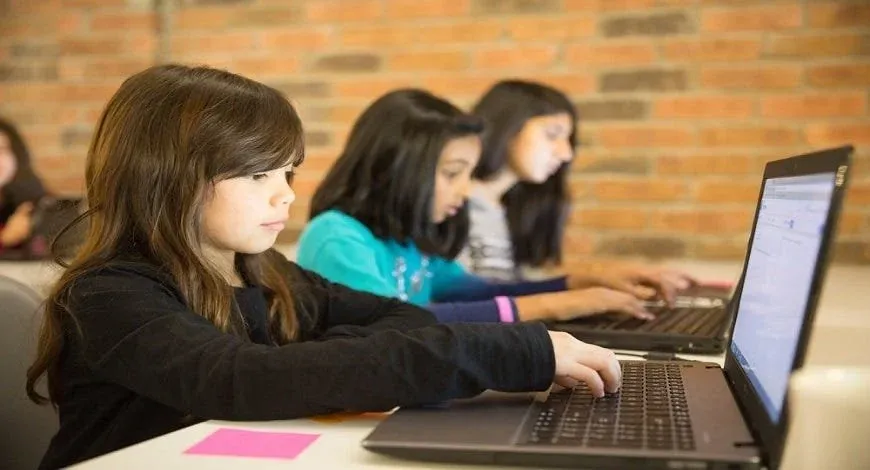
Image Source: Schools That Lead
When implemented correctly, artificial intelligence in the classroom delivers transformative results that extend far beyond mere efficiency gains. Let’s examine the concrete benefits that properly implemented AI brings to educational settings.
Improved student engagement
Properly designed AI systems enhance student motivation by creating personalized, responsive learning experiences. Studies show that AI-driven adaptive learning platforms can significantly boost student engagement by tailoring content to individual learning styles and pace. Recent implementations demonstrate that students using AI for interactive dialogs with educational content show measurable improvements in scientific reasoning and engagement.
AI tools effectively gamify learning through interactive quizzes and simulations that respond directly to student input, keeping learners motivated and actively involved. For instance, platforms like Kahoot! use AI to create dynamic quizzes that maintain student interest while reinforcing key concepts. Additionally, students using AI-enhanced active learning show 54% higher test scores compared to traditional environments.
Faster feedback loops
One of the most valuable contributions of AI in education is providing immediate feedback that prevents misconceptions from taking root. AI systems analyze student work in real-time, delivering instant insights to both learners and teachers.
A Stanford-led study published in Educational Evaluation and Policy Analysis found that AI-powered feedback tools improved instructors’ teaching practices by helping them better acknowledge student contributions. Furthermore, this research revealed improved rates of assignment completion and overall course satisfaction among students.
More inclusive learning environments
Perhaps most importantly, AI creates unprecedented accessibility in education. For students with disabilities, AI-powered tools like text-to-speech, visual recognition, and speech recognition make previously inaccessible materials available. In Uruguay, students with different learning needs successfully engage with the same lesson together through AI-adapted digital textbooks.
A teacher from an inclusive school noted: “There’s a child with autism in the class, and the digital textbook allows him to interact… he comes to the front, takes an active role, interacts, plays and participates”. This inclusivity extends to multilingual learners as well, with AI providing real-time translation and language support.
By recognizing these substantial benefits, educational institutions can move toward embracing artificial intelligence in the classroom as an essential component of modern teaching rather than an optional supplement.
What Needs to Change for AI to Be Embraced Openly
Image Source: Edutopia
For artificial intelligence in the classroom to move from hidden adoption to open practice, fundamental changes are needed at system-wide levels. The current underground approach limits both innovation and accountability.
Clear district-level policies
First and foremost, educational institutions must develop explicit AI frameworks. Currently, only 20% of provosts and 19% of presidents report having institutional AI policies, leaving most educators without clear direction. This policy vacuum explains why merely 16% of undergraduates understand when AI use is appropriate.
Effective policies must be dynamic and cyclical rather than static documents. A dedicated guidance team should assist in determining the trajectory of AI implementation while ensuring compliance with privacy, transparency, and equity laws.
Professional development for teachers
Given that nearly 58% of K-12 teachers have received no AI training whatsoever, professional development becomes crucial. UNESCO emphasizes that countries must guarantee a minimum technical foundation for all educators.
Training should be ongoing and role-specific, tailored for administrators, teachers, counselors, and support staff. These learning experiences must encourage practical application and reflection rather than theoretical knowledge alone.
Open conversations about ethical use
Equally important, schools must foster interdisciplinary dialog about AI ethics. These conversations should address privacy concerns, algorithmic bias, and appropriate boundaries.
Throughout these discussions, schools can build what UNESCO describes as “critical thinking and intellectual curiosity” – qualities essential for responsible AI integration that benefits both teachers and students.
Conclusion
Artificial intelligence continues to reshape education in profound ways as we move through 2026. Teachers who embrace these tools gain significant advantages – saving nearly six weeks annually while creating more personalized learning experiences for their students. However, this quiet revolution still faces substantial hurdles before widespread, open adoption becomes reality.
The current underground approach to AI implementation creates unnecessary inconsistencies for students and widens policy gaps over time. When one classroom encourages AI use while another prohibits it, students receive contradictory messages about appropriate technology use. This fragmented landscape prevents the sharing of best practices that could benefit entire school systems.
Schools must address three critical areas to move forward. First, clear district-level policies would provide necessary guidance for both educators and students. Second, comprehensive professional development would equip teachers with the skills to implement AI effectively. Third, open conversations about ethical considerations would establish appropriate boundaries for everyone involved.
Teachers should not feel compelled to hide their AI usage out of fear or uncertainty. After all, these tools address genuine educational challenges – overwhelming administrative tasks, personalized learning needs, and severe time constraints. The data speaks volumes – students in AI-enhanced learning environments achieve 54% higher test scores while teachers reclaim countless hours previously lost to routine work.
The path ahead requires balance. AI tools work best as enhancements to human teaching rather than replacements. Though challenges regarding academic integrity and ethical boundaries remain, these concerns need addressing through thoughtful policy rather than avoidance of valuable technology.
AI in education represents not just a technological shift but an opportunity to reimagine teaching itself. When educators can openly embrace these tools without stigma, they rediscover joy in creative teaching while students benefit from more engaging, accessible learning experiences. The question facing schools today isn’t whether to adopt AI, but how to do so thoughtfully, equitably, and transparently.
✨ Notie AI – The AI that corrects your papers